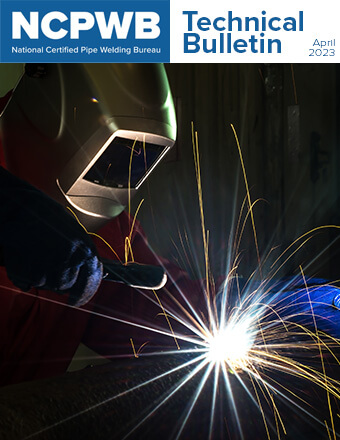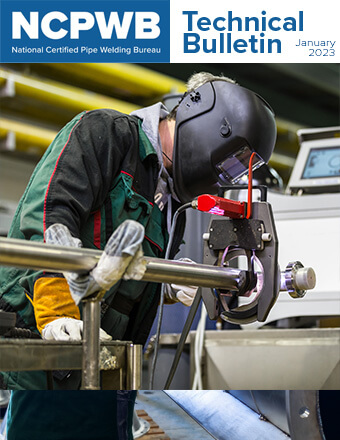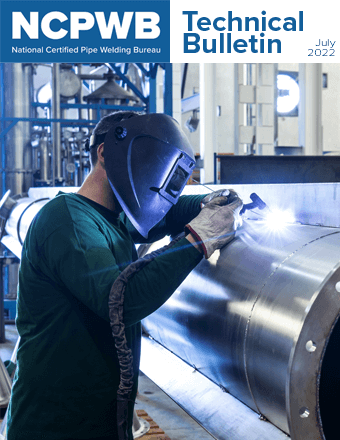
Piping codes are standard industry practice, and failure to agree on the one that applies to your work can result in ugly disputes with customers. Customer specifications can have inspection requirements that can result in repairs to welds that you did not plan for. Welders can make welds that put your business at risk. This article highlights what you can do to avoid these risks.
NCPWB Technical Bulletin: What Mechanical Contractor Managers Need to Know About Piping Codes and Customer Specifications
Formats for Download
Related Resources
Description:
MCAA is committed to stemming our industry’s high suicide rates by breaking down the stigma surrounding mental health. Over the last year, MCAA partnered with the UA, NECA, SMACNA, and TAUC to distribute over 100k 988 awareness hard hat stickers and chips. At the same time, we built a comprehensive mental health program that includes dozens of toolbox talks and a world-class mental health awareness and suicide prevention video.
Description:
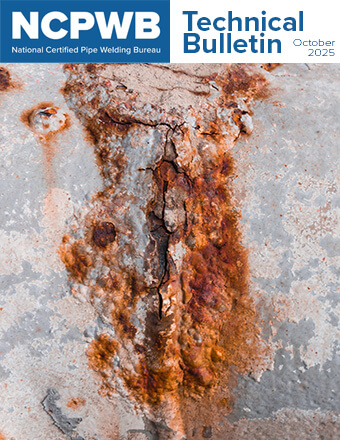
What is Microbiologically Influenced Corrosion (MIC) and why do contractors need to know anything about it? Well, it turns out that MIC can negatively affect your profits.
Description:
On occasion we get questions from our members who would like to use backing flux in lieu of purging when making welds on stainless steel or other corrosion resistant materials. This bulletin describes an experiment conducted by NCPWB Consultant Walter Sperko where he had a colleague make stainless steel butt welds without any protection of the root of the weld, with inert gas backing, with backing flux and with flux-coated wire.
Description:
When reviewing a Welding Procedure Specification (WPS) or a welder qualification record, the term "backing" frequently appears. In some cases, backing is required, while in others, it is optional. Backing can take various forms, including metal, non-fusing metal, nonmetallic materials, or even weld metal. But what exactly is "backing," and why is it important in welding?
Description:
The construction industry is facing unprecedented challenges with ongoing and evolving tariffs on essential materials like steel, aluminum, and copper — and the impacts are rippling through the supply chain. Our expert panel talks through the real-world implications of these tariffs. From understanding the current tariff landscape to anticipating future increases and how suppliers and manufacturers are responding, this webinar will equip you with the knowledge to manage rising costs and protect your business.
Description:
On February 6, 2025, Daniel Bunn, President & CEO of the Tax Foundation, provided an in-depth analysis of expected federal policy changes during the second Trump administration during an MCAA webinar. A recording of the session, which was moderated by Jim Gaffney and Chuck Daniel, is now available. Don’t miss this opportunity to gain valuable insights from a leading expert in the field.
Description:
The E6010 electrode is a wire encased in cellulose held together with salts and minerals. These electrodes penetrate better than low-hydrogen electrodes like E7018 when making root passes, making it easier to make a good root pass. However, E6010 introduces hydrogen into the weld creating a risk of cracking, and this article shows when its use should be limited.
Description:
The 2024 Beacon Economics Market Report delivers up-to-the-minute insights and data-driven analysis tailored for mechanical service contractors. Uncover updated key trends for 2024, including market shifts and economic forecasts that directly impact your business. This study is an invaluable resource for looking at market trends that will help guide strategic decisions and keep you competitive. Don’t miss out on this powerful tool—download the new report today!
Description:
Understanding the implications of the Inflation Reduction Act and its impact on pricing jobs for installing heat pumps or heat pump water heaters can be daunting. However, a new resource from ENERGY STAR aims to simplify this process, specifically tailored for selling and installing Air Source Heat Pumps, Heat Pump Water Heaters, and Electric Panel Upgrades. It's crucial for both contractors and property owners to grasp these credits, as they can cover up to 30% of project costs.