
Would you like to make the back-office side of your plumbing business more efficient? Tool technology has changed the way we work on jobsites, but it can also simplify business management. From staying ahead of needed tool maintenance to streamlining recordkeeping, integrated tool technology in drain cleaning, pressing, and diagnostic tools can make your business run more efficiently. Here are a few examples of how tool-integrated software from Ridge Tool Company and others can boost your business operations:
- Tool history and inventory planning: Gain insight into tool usage to better understand how and when your tools are used on a jobsite. This information is valuable for tool purchase planning and helps ensure you are investing in the best tools for your business.
- Maintenance scheduling: Many tools now provide preventive maintenance reminders based on collected usage data, allowing you to plan routine maintenance to keep projects on time and in budget.
- Tool finding: Jobsites can be chaotic, and tools can easily be misplaced. With last-seen location features of an app like RIDGID Link, you can determine the exact location where a tool was last connected. Additional features allow remote locking and unlocking of tools to prevent unauthorized tool use for enhanced jobsite safety.
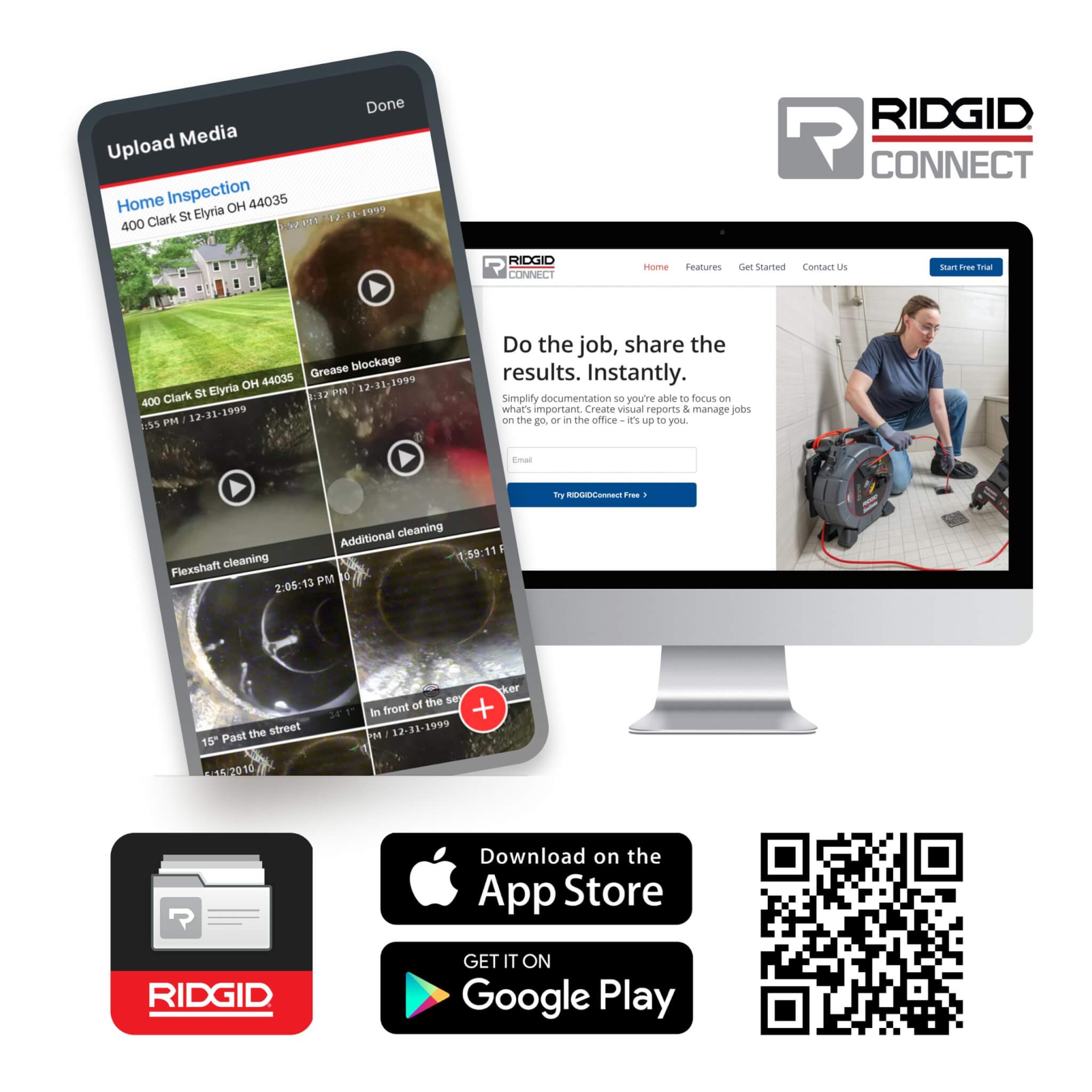
- Job reporting: Access detailed job data, such as video, images, maps, and graphs, that can be used in compatible reporting systems. Information can be shared via mobile device for on-the-go reporting, such as in-pipe findings, project completion details, and other key metrics. For example, RIDGIDConnect™ is an online tool designed for contractors and service providers to create and share reports with customers that include videos, documents, and pictures collected from jobsites.
- Streamlined organization: Tool software apps let you organize registrations, manuals, and service information in one place, so you do not need to keep track of physical copies. Easily access these digitally stored documents by phone or tablet for on-the-go viewing.
However you decide to use these features in your business, make sure the software enhances what the tool provides. Tool capability should always be first in making a purchasing decision, with business capabilities secondary. Consider whether the software is creating efficiencies for you, elevating the work you produce, and allowing you to continue differentiating yourself in the industry.
Soon, with the help of artificial intelligence, tool software will collect data on how the tool is used and optimize settings or configurations to enhance performance. As the cost of cellular connectivity comes down or other means become available that allow constant connection, many capabilities will become more common, such as remote access to control the tools, video streaming or streaming of other data from the tool to the cloud, and more granular location information available on demand so you always know where your tool is.
Brad Yuronich, director of software development for RIDGID, contributed the content for this story. For more information, visit www.ridgid.com.