
In commercial plumbing and mechanical systems, material selection is far more than a matter of preference or budget—it directly impacts system performance, longevity, and reliability. Standards offer a framework, but truly effective practice requires that you match the materials to the specific demands of the application.
This article compares the primary materials used for two of the most commonly used valve types—ball and butterfly. NIBCO INC. believes that better understanding these materials can help you specify the right component for the right application, every time.
Understanding Valve Function and Design
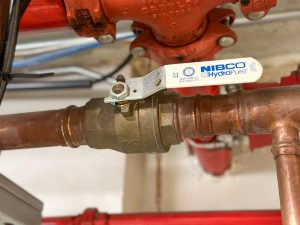
A ball valve is a quarter-turn valve used for controlling the flow of liquids or gases in a piping system. “Quarter turn” means the valve handle turns 90 degrees from fully open to fully closed. Usually, a ball valve is bidirectional for flow and omnidirectional for installation, meaning installation is relatively straightforward regardless of orientation within the system. Ball valves can provide a bubble-tight seal. Their compact profile makes them much easier to fit into a system than a gate valve or a globe valve, and the quarter-turn operation makes them faster to operate than a multi-turn valve. Ball valves are a mainstay for isolation service and are more easily automated than gate or globe valves.
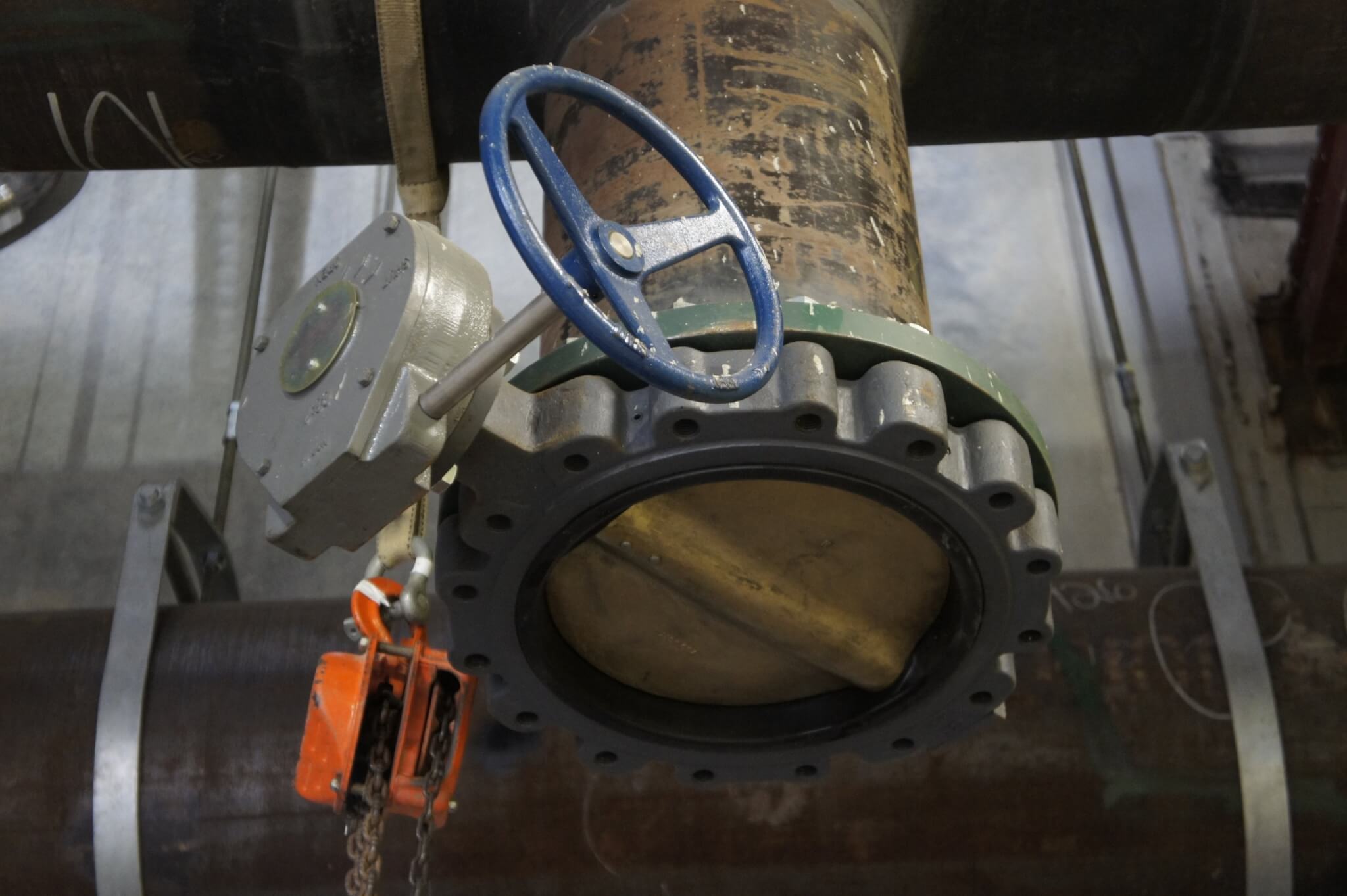
A butterfly valve, also a quarter-turn valve, features a disc mounted on a rotating shaft, which turns to open or close flow. Butterfly valves are commonly used where space is limited and affordability is a concern. In most cases, a butterfly valve is bidirectional for flow and omnidirectional for installation. Because of the slim disc profile, a butterfly valve is a suitable substitute for a globe valve for throttling applications, while generating less of a pressure drop. Butterfly valves are also easily automated compared with multi-turn valves.
Bronze vs. Brass: Choosing the Right Alloy
Bronze, brass, and lead-free brasses and bronzes are the primary alloys used in commercial plumbing and mechanical systems. Industry standards, such as the Manufacturers Standardization Society (MSS) SP-110 standard, often do not clearly differentiate between the types of copper alloys used. As a result, terms like “bronze” and “brass” are frequently used interchangeably, despite their differences. Each material has its own set of pros and cons to consider.
Bronze is traditionally a copper alloyed primarily with tin. Because bronze valves are typically produced via casting, they are heavier with thicker walls than forged valves, which contributes to their strength and longevity. They are highly corrosion-resistant, durable, and ideal for demanding applications. However, bronze valves tend to be more expensive and more difficult to machine.
Brass, by contrast, is a copper alloyed primarily with zinc and is often forged. Brass valves are easy to machine, aesthetically pleasing, affordable, and widely available. Forged alloy products may be generally lighter due to thinner wall structures, which can result in a shorter lifespan.
Brass is susceptible to dezincification, in which zinc selectively leaches out, making the brass porous and weak. Factors such as zinc content, water chemistry, and environmental conditions all affect dezincification. Alloys with more than 15 percent zinc are generally at higher risk, unless they contain additives to prevent dezincification.
Application Considerations for Ball Valves
When choosing the material for ball valves, consider these factors:
- The media being conveyed (e.g., potable water, chemicals)
- Water chemistry, including pH, chlorides and total dissolved solids
- Installation environment, such as buried service or exposure to temperature fluctuations
- System criticality, including whether the application is mission-critical
Cast copper alloys of higher tin content are recommended for high-end, commercial, or mission-critical projects and for systems with harsh media, aggressive water chemistry, or exposure to corrosive environments. Copper alloy of higher zinc content and forged alloys are perfectly acceptable for less-demanding residential systems where cost is a concern and the risk of corrosion is minimal.
Butterfly Valves: Cast Iron vs. Ductile Iron
Butterfly valves are made of cast iron or ductile iron, both of which fall under the MSS SP-67 standard for general-purpose valves. As with ball valves, each material has its own set of pros and cons.
Cast iron is known for its strength and vibration resistance. Composed mainly of iron, it also contains 2–4 percent carbon and small amounts of silicon. Cast iron costs less than ductile iron and is relatively easy to manufacture. However, it is extremely rigid, and virtually any bending will cause it to crack or break.
Ductile iron is similar in composition to cast iron but includes magnesium, which gives it superior impact resistance, tensile strength, and flexibility, so it is less likely to break or crack than cast iron. It also performs better in high-temperature environments and is more resistant to corrosion. However, ductile iron is more expensive than cast iron.
Application Considerations for Butterfly Valves
For most commercial applications where valves are properly installed between flanges and are not exposed to excessive stress or corrosive environments, cast iron is often sufficient and cost-effective. In systems that involve high pressure, frequent cycling, or severe conditions, ductile iron is a superior choice because it can better handle stress and resist cracking under load.
Best Practices
In an industry where failure can be costly or catastrophic, precision in material selection is critical. Look beyond minimum standards and generic material categories to fully understand the alloys you are working with and how they will perform under specific conditions. Consider the operating environment, installation method, and system criticality. This additional scrutiny helps ensure long-term system performance and minimizes the risk of premature failure, saving time, cost, and reputational damage down the road.
Aaron Kilburg, commercial sales manager at NIBCO, contributed the content for this story. For more information, visit www.nibco.com. For additional guidance on specific applications, contact CS-TechnicalServices@ nibco.com.