
In an evolving industry where quality, labor shortages, safety, and environmental impact are top-of-mind, mechanical contractors are faced with critical decisions when specifying materials for their projects. Choosing domestically manufactured standard pipe over their imported equivalents can increase the quality, safety, and sustainability of any project.
Risks of Imported Pipe
Imported pipe can come with issues that can result in significant waste and pose compliance challenges. Common concerns include poor weld quality and early-onset corrosion, which creates red and white rust that may lead to UL violations. Beyond the low quality of the pipe itself, imported standard pipe may be produced in facilities that are not environmentally friendly or that use unethical labor practices. The high carbon footprint associated with overseas shipping further underscores the environmental cost of imported products.
Domestically Made Solutions
When you choose domestic pipe, you are choosing to use widely available products with the service and support that you need. By sourcing pipe products domestically, you have the opportunity to procure custom lengths and end finishes to avoid waste and work more efficiently on the jobsite. With more than 350 combinations of finishes, end treatments, and custom lengths, Wheatland Tube is the top domestic manufacturer of high-quality standard pipe.
In addition, Wheatland Tube’s new HDZ Coat provides long-lasting protection that prevents early white rust and eliminates microbial contamination. Their proprietary, in-house, five-step galvanization process guarantees a finish with no dross or debris that meets the galvanization requirements of new ASTM A135, A53, and A795 standards.
Relying on domestic manufacturers also offers other benefits:
- Total supply chain control: Working with domestic manufacturers gives you more control of the ordering process. Wheatland provides manufacturer-direct services, such as dedicated sales representatives, alongside technical and logistics support. Advanced commerce systems like electronic data interchange (EDI), automated inventory management (AIM), and Wheatland’s Z-Commerce online portal help minimize lead times, mitigate unexpected supply chain events, and result in faster fulfillment.
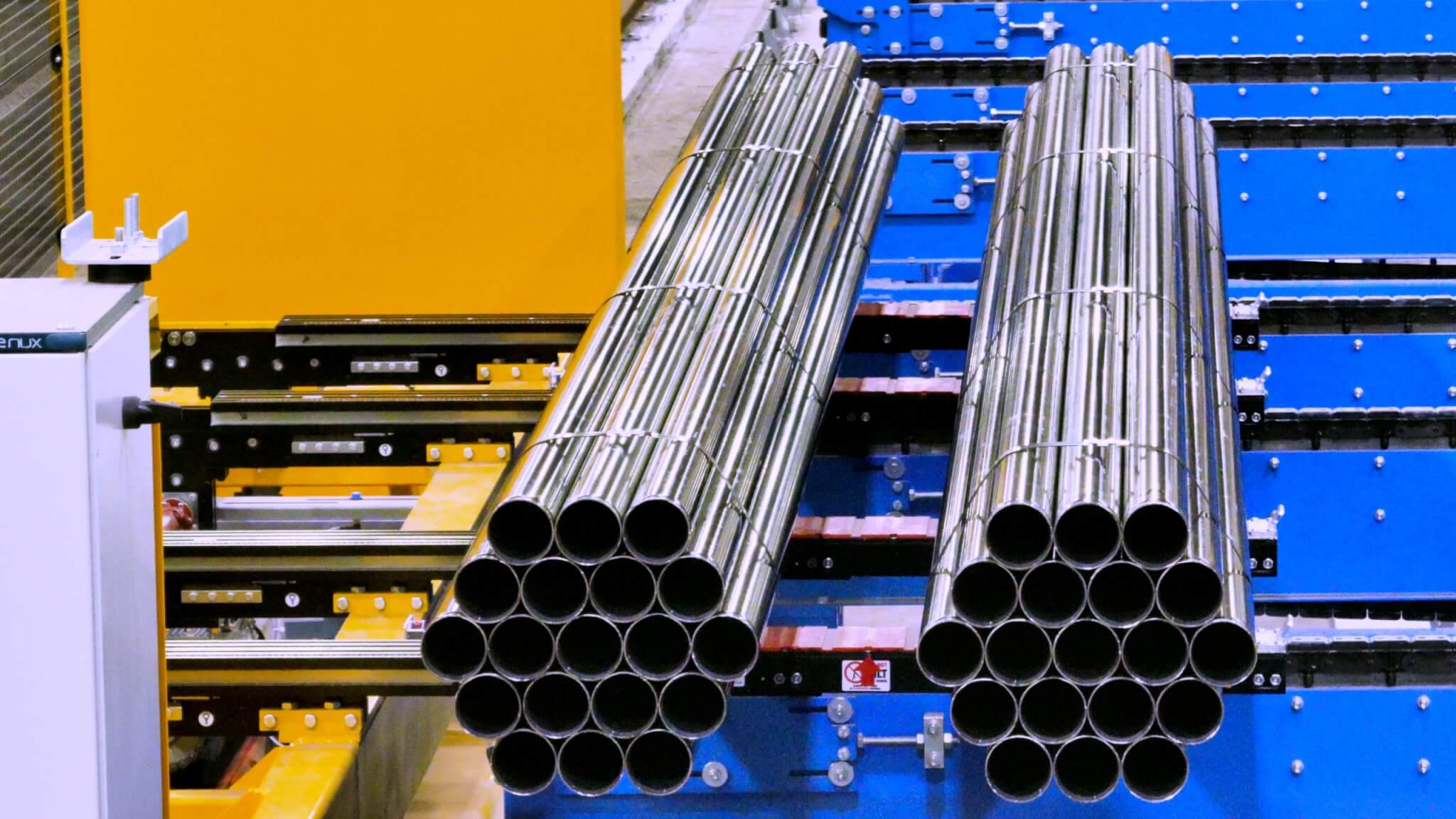
- Technological advancements: Domestic manufacturers use advanced technology to optimize efficiency. For example, Wheatland Tube’s products are made in a state-of-the-art facility in Warren, OH. Their Matter Automated Warehouse minimizes manual handling throughout the production, bundling, and storage process, making the facility one of the safest in the world. Additionally, by storing products in a controlled environment and streamlining operations with full automation, products are delivered free of rust and damage and ready to install, with significantly shortened lead times.
- Environmental advantages: According to a 2023 report, the U.S. could cut approximately 11.3 million metric tons of carbon dioxide emissions per year—about 13 percent of the total annual emissions of the American steel industry—if imported steel were produced domestically.* Wheatland pipe steel comes from domestic suppliers. They are committed to reducing emissions from their factories by exceeding environmental regulations and investing in technology that allows them to manufacture products more efficiently and cleanly. Buying domestically produced products contributes to local economies and to the future of the planet.
Choosing and installing domestic pipe from companies like Wheatland not only ensures quality and reliability, but also lets you take pride in supporting local industries and creating projects you can truly stand behind.
For more information, visit www.wheatland.com.
*Hasanbeigi, A. (June 2023). Embodied CO2 emissions in steel imports to the U.S.: A white paper on steel trade, carbon competitiveness, and decarbonization. Global Efficiency Intelligence. Available at: https://www.globalefficiencyintel.com/embodied-co2-emissions-in-steel-imports-to-the-us