
Welcome to Smart Solutions

Smart Solutions case studies highlight how MCAA contractors and Manufacturer/Supplier Council members collaborate to improve productivity, manage costs, and solve real‑world project challenges. Each case study focuses on practical applications of products, technologies, and processes that deliver measurable results across mechanical construction, service, fabrication, and operations.
Through real project examples, Smart Solutions provides insight into how contractors are applying innovative solutions to streamline workflows, improve coordination, and enhance overall performance. Explore the case studies below to identify ideas, approaches, and proven practices that can be adapted to your own operations.
Latest Issue
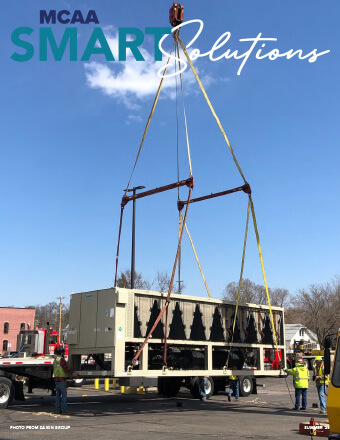

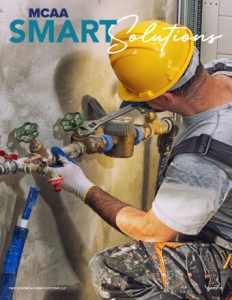
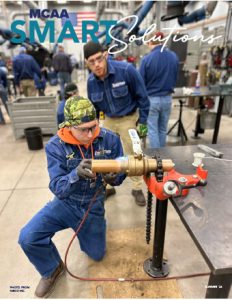
Xylem’s Bell & Gossett Little Red Schoolhouse Teams Up with the UA
Xylem’s Bell & Gossett Little Red Schoolhouse and the United Association (UA) union of plumbers, fitters, welders, service technicians, and roofers have formed a training partnership to equip trade professionals in the HVAC field with the technical expertise to service and repair pumps in an HVAC system.

Bell & Gossett Helps NYC Add ICU Beds ASAP
When New York City was confronted with a surge in COVID-19 cases in March, Xylem brand Bell & Gossett quickly provided the design assistance and products needed to increase capacity at North Central Bronx Hospital (NCB), the smallest of 11 public hospitals in the city’s health system. The hospital went from 15 intensive care unit (ICU) beds before the COVID-19 outbreak to 135 ICU beds in just a few months.

How Smart Pump Technology Simplifies Installation & Maintenance
The development of intelligent pumping systems with smart motors is key to meeting the growing demand for better efficiency and reduced energy consumption. Integrating smart technology in pump systems can simplify installation and maintenance, ensure reliable operation, and minimize environmental impact.

Xylem Illustrates How Smart Technology Streamlines Preventive Maintenance
Preventive maintenance is crucial for ensuring the reliability and efficiency of pumps and motors, which are essential components of commercial HVAC applications. An effective maintenance program can reduce unplanned downtime, decrease maintenance costs, and extend asset life. All of these drive business value, which is especially important in today’s competitive and challenging commercial building environment, when building operation teams are being asked to do more with less.