Smart Solutions case studies highlight how MCAA contractors and Manufacturer/Supplier Council members collaborate to improve productivity, manage costs, and solve real‑world project challenges. Each case study focuses on practical applications of products, technologies, and processes that deliver measurable results across mechanical construction, service, fabrication, and operations.
Through real project examples, Smart Solutions provides insight into how contractors are applying innovative solutions to streamline workflows, improve coordination, and enhance overall performance. Explore the case studies below to identify ideas, approaches, and proven practices that can be adapted to your own operations.
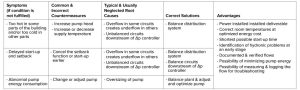
The ultimate goal of every heating and cooling installation is to provide the desired indoor climate at the lowest possible energy cost. Today’s advanced control technology means that, in theory, achieving this goal is possible. In practice, however, even the most sophisticated controllers do not always perform as promised. The result is lower-than-desired comfort level and high energy expenditure. The controllers can only perform their functions as specified if the three key conditions for hydronic control are fulfilled.
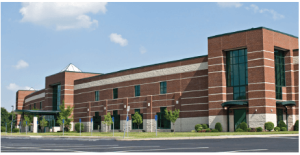
Close collaboration between IMI TA, a branch of IMI Hydronic Engineering, and building designers led to a 23-percent savings in annual energy consumption (equivalent to $19,341) for an Oklahoma public building. The Lawton Public Safety Facility in Clay Coe, OK, is a 100,000-square-foot, four-story building with 350 working stations. The original design strategy for the facility included proportional control valves with no balancing valve on each terminal and a variable speed pump (VSP) differential pressure (DP) sensor.
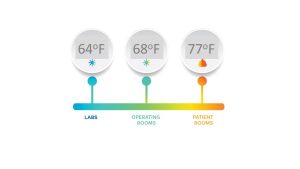
The performance of any health care building is linked to the HVAC ecosystem, as accurate indoor temperature and air quality are critical in health care settings. However, each project comes with its own set of challenges. IMI Hydronic Engineering has over 300 years of combined experience on hydronic systems.