
Welcome to Smart Solutions
Smart Solutions case studies highlight how MCAA contractors and Manufacturer/Supplier Council members collaborate to improve productivity, manage costs, and solve real‑world project challenges. Each case study focuses on practical applications of products, technologies, and processes that deliver measurable results across mechanical construction, service, fabrication, and operations.
Through real project examples, Smart Solutions provides insight into how contractors are applying innovative solutions to streamline workflows, improve coordination, and enhance overall performance. Explore the case studies below to identify ideas, approaches, and proven practices that can be adapted to your own operations.
Latest Issue

Small Steps, Big Wins: Staying Ahead with Cumulative Learning Featuring Tyfoom
For mechanical contractors, staying competitive is a constant battle. But that doesn’t mean you need to make big changes that take a lot of time, effort, and money—it’s about making small, steady improvements over time in processes and people that add up to remarkable results. Focusing on marginal gains and cumulative learning offers a practical way to boost efficiency, reduce risks, and retain top talent—all while building a smarter and more capable workforce.

Fostering a Learning Organization to Avoid Human Error and Accidents
Human error is often misinterpreted as solely a human issue. However, it predominantly arises from system flaws within organizations. We inadvertently create systems that tolerate poor processes for the sake of rewarding outcomes, leading to constraints and errors. To effectively prevent and mitigate human error, it is crucial to shift our focus towards understanding the systemic factors at play.

Simplifying the Way We Capture and Transfer Knowledge
With more than 70 million baby boomers set to retire by 2030—more than 10,000 each day—organizations need to rethink the way they capture and transfer knowledge before it is lost forever.
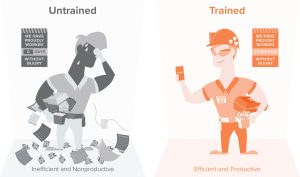
The Cost of Not Training – Tyfoom Explains How Training Makes Employees More Productive, Profitable, and Committed
Training is key in driving desired systematic improvement in any organization. Yet many businesses see training as an optional cost rather than as a necessary investment with a significant return. Consequently, training often drops to the very bottom of companies’ priorities. Prioritizing training, however, makes your employees more productive, more profitable while at work, and more committed to your organization.