Welcome to Smart Solutions
MCAA’s mission is to guide and support member success to build a stronger, more sustainable future for the mechanical contracting industry. Through member-driven resources, comprehensive education, and strategic partnerships, we empower members to shape a future of unparalleled innovation and growth.
Latest Issue

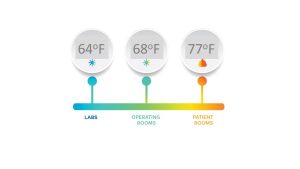
Installing Hydronic Systems in Health Care Facilities: Tips from IMI Hydronic
The performance of any health care building is linked to the HVAC ecosystem, as accurate indoor temperature and air quality are critical in health care settings. However, each project comes with its own set of challenges. IMI Hydronic Engineering has over 300 years of combined experience on hydronic systems.
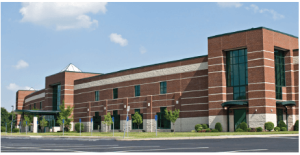
IMI TA’s Support Center Cuts Energy Costs at Oklahoma Public Safety Facility
Close collaboration between IMI TA, a branch of IMI Hydronic Engineering, and building designers led to a 23-percent savings in annual energy consumption (equivalent to $19,341) for an Oklahoma public building. The Lawton Public Safety Facility in Clay Coe, OK, is a 100,000-square-foot, four-story building with 350 working stations. The original design strategy for the facility included proportional control valves with no balancing valve on each terminal and a variable speed pump (VSP) differential pressure (DP) sensor.
IMI TA’s Support Center Cuts Energy Costs at Oklahoma Public Safety Facility
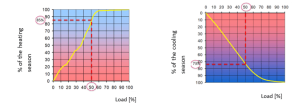
In recent years, the power needed to heat or cool buildings has fallen dramatically with the focus on reducing energy consumption and minimizing the environmental impact of HVAC installations. The flow rates in our installations are much lower now than in the past, especially if we use modulating controls on the terminal units.
IMI Hydronic Engineering Describes Keys to Perfect Hydronic Climate Control
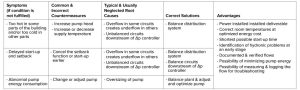
The ultimate goal of every heating and cooling installation is to provide the desired indoor climate at the lowest possible energy cost. Today’s advanced control technology means that, in theory, achieving this goal is possible. In practice, however, even the most sophisticated controllers do not always perform as promised. The result is lower-than-desired comfort level and high energy expenditure. The controllers can only perform their functions as specified if the three key conditions for hydronic control are fulfilled.